Česky
Česky



The King of Waltz André Rieu Returns to the O2 arena: Interview
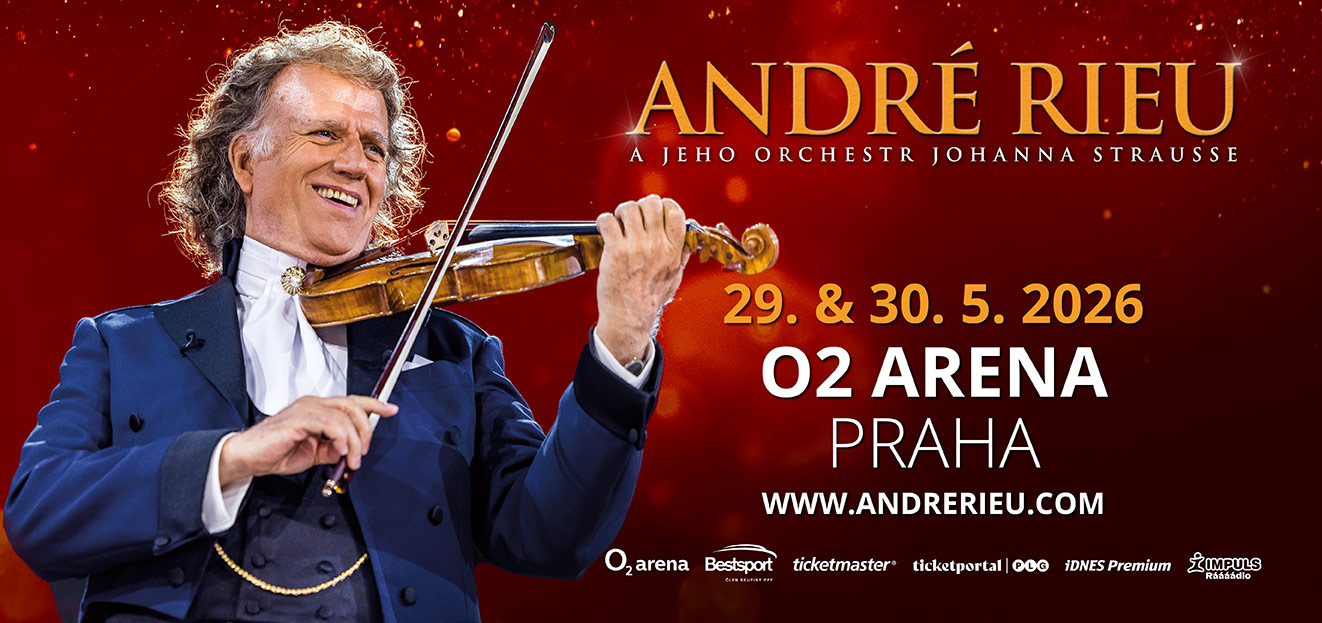
A phenomenon that breaks down the boundaries between classical music and grand spectacle is returning to Prague. André Rieu will once again perform at the O2 arena, bringing not only his Johann Strauss Orchestra but also an atmosphere full of emotion, humor, and world-famous melodies.
You return to Prague regularly. What makes the local audience special to you?
Prague is a wonderful city, the people are very kind and very musical too. I simply love coming to this magnificent town! I realise Antonín Dvořák got his inspiration from; the surroundings are so beautiful, and I bet the people in his time were very friendly already. I really feel their pride of their culture, when they’re coming to my concerts.
Do you perceive a difference between audiences in Central Europe and elsewhere in the world?
May be it’s their cultural heritage they’re completely aware of, I see that more in Central and Southern Europen than in, let’s say, other parts of the continent. When I play a song that is known throughout the country, people stand up immediately, lay their hands on their chests or hearts and start to sing out loud. That’s really moving!
Do you have a specific memory from past concerts in Prague that has stayed with you?
Not a specific memory, it’s just the fact that I feel almost at home in a city like Prague: just like my hometown Maastricht, it is a city with a rich cultural history which goes back for several centuries. You feel the breeze of history in the narrow streets of the centre, and when I look at the Moldau – or Vltava as the citizens call this river – I hear Smetana’s haunting melody when he composed the My Vlast pieces. Wonderful!
Your concerts are often described as a “celebration of joy.” How do you consciously create this atmosphere?
Every emotion you see on stage is real, there isn’t a single „fake moment“ on stage. We really have fun on stage and when we have fun, I’m almost sure that the audience amuses itself as well. Music is the art form that goes to your heart immediately, which counts for the musicians as well as the audience that hears it. My concerts ought to be a celebration for all the senses, by the way: not only the ears should be treated, the eyes as well. That’s why my concerts are described as a celebration of joy, I suppose.
In your opinion, what helps classical music reach new generations today?
One has to get rid of the idea that classical music is meant for a so called elite. Classical music, just like other music, has been composed for all of us; men like Strauss and Mozart have been genuine pop stars in their own time, really! I bet when these guys would have lived nowadays, they would have had thousands of followers on their socials, fans would take selfies with them and who knows, Mozart would have composed a concerto for synthesizer and orchestra, haha!
The Johann Strauss Orchestra is known for its energy and visual appeal. How do you keep the team motivated over the long term?
It’s our common belief that music contains magical and healing powers. Také for example the waaltz: this ¾ rhythm has something I can’t describe precisely, but once you hear this special rhythm, I bet you can’t sit still anymore. Some of my orchestra members are already more than 30 years together with me, and I admire their loyalty to me and to the music we play. I simply don’t know any other orchestra where people stay that long, do you?
How do you select new members of the orchestra—do you look more for technical perfection or personality?
Both, to be honest. You know, we are one Big Family – I call the Johann Strauss Orchestra like that – and you have to fit in into this group. Besides that, when one comes and wants to joint his family, I try and feel with my heart whether you can me a member of this orchestra or not. When you feel the music you play, and you’re capable of capture my attention, then I know that you can join us.
Do you have any pre-performance rituals within the orchestra?
Have a healthy meal and take a power nap. After that, I check and tune with all the orchestra members, I try to concentrate and focus on the texts I’m about to say and then… it’s showtime! I’m always a little nervous, but I need this tension. If I wouldn’t feel this, I bet I’d perform like an automatic pilot and one has to try to avoid that! The nervousity disappears almost immediately when the first notes are played, by the way…
Your concerts are not just about music, but a grand show. How much are you involved in directing and the visual aspect?
People say I’m a perfectionist, which is true I’m afraid. I’m involved with every single detail, whether a jewel on the necklace from one of the sopranos or a dimmed light during a special song, you name it. The show has to be perfect – only then I know that the concert will be fine and the audience will experience that feeling they’ve had now for ages.
Are you preparing anything special or surprising for Prague this year?
Who knows… Actually, musical surprises are not to be told otherwise they would be no surprises anymore, don’t you agree? So let’s all wait patiently until we’re back in Prague, haha!
How challenging is it to bring such a large-scale production to different venues around the world?
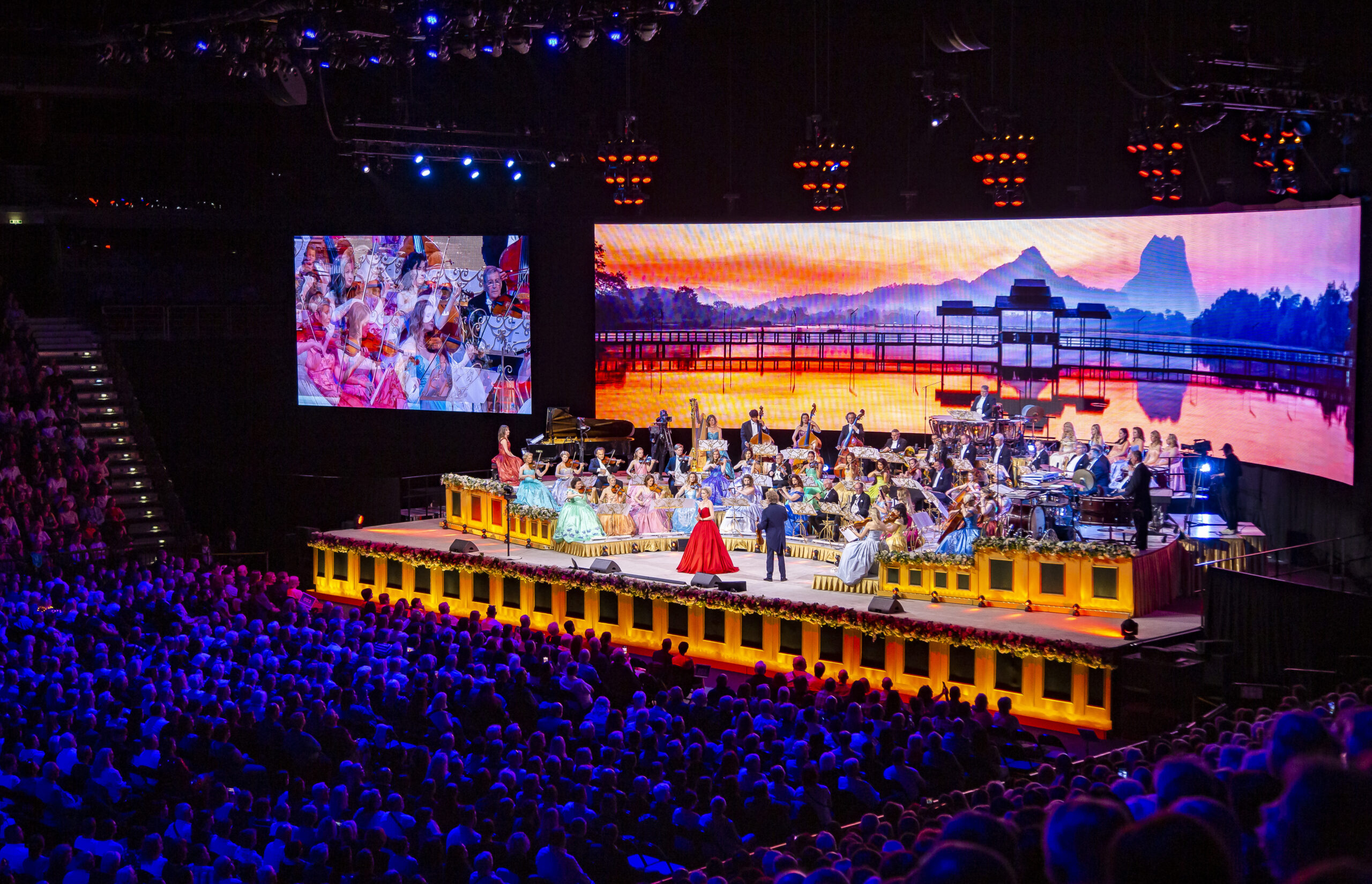
It’s quite a challenge indeed, that’s why I own several sets of my stage. Especially when we tour: the technical crew cleans and breaks offo ne stage while the other half of the crew is already on its way to the next venue in order to build up the stage right there. Of course I feel responsible for all of this, but – knock wood – it has never gone wrong until today… Fingers crossed!
After so many years on stage, what still motivates you to travel and perform?
Several things keep me motivated. First of all, it’s my loyal audience, the fans we all have throughout the world. Wherever we come, we receive such a warm welcome: the smiles on these faces are so heart warming, I realise then I’ve chosen the right job. And it’s not only the huge group of fans, but also the music itself. I never get tired of playing all these beautiful melodies: Strauss really knew how to capture romance and melancholy, joy and happiness into his melodies. I hope I’m able to do this for many years to come.
How do you relax between concerts during a tour?
I do my exercises with Ruud, my personal trainer. But I also like to read or do a little Sudoku puzzle, haha. Once in a few hours, I take a power nap and I pay attention of the food. I don’t go shopping, that’s too exhausting for me.
Are you familiar with any Czech composers or music that has resonated with you?
Well, I know quite a lot. My father used to be a a symphony orchestra conductor and I attented quite a few concerts when I was a kid: he regularly included the Czech repertoire from Dvořák and Smetana, but also Janacek and Suk and the Hollywood composer Korngold. He wrote fantastic film music – I know this thanks to my son Marc who knows a lot about film soundtracks and their history.
Could you imagine including Czech repertoire in your program?
A couple of years ago, one of my sopranos performer Rusalka’s Song To The Moon by Antonín Dvořák; she sang that during our world tour, and it had a lot of success. May be, I’ll reconsider a Czech song but there are so many beautiful melodies… I simply can’t choose!
What would you recommend to your concertgoers so they can fully enjoy the evening?
Sit back and enjoy the ride, haha! Well, not sit back but let go all of your worries and feel free to show your emotions. When you’re happy, show your smile… when you’re sad, show your tears… just be yourself, like we do! Then I know you’ll have an evening you won’t forget!
Quick questions – quick answers:
Three words that describe Prague?
Outstanding – Vibrant – Romantic
Your favorite piece to perform?
Johann Strauss‘ waltz „By the Beautiful Blue Danube“
Audience: sit or dance?
DANCE ! ! !
Your greatest joy on stage is…?
Shared energy!